













I had the honor of interviewing the founders of the company, Non-Ball, and even met them at a demo a few months back, and I just want to say, in a time when screens are all we think about and face-to-face interaction is declining, Brett and Joseph Howard are betting on something simple: play. Joseph and Brett Howard, the creators of non-ball, aren’t just launching a product; they’re trying to Bring Back Play into kids’ lives and giving them the chance to interact socially without much need for skill, What began as a small experiment has evolved into a potential new sport, one designed to be as easy to pick up as it is hard to put down.
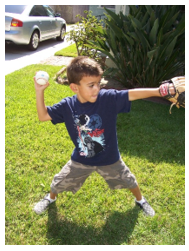
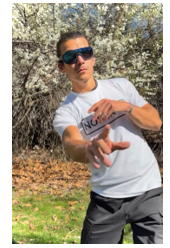
Both images are of Founder Joseph Howard. The one on the bottom was taken this last year, and the one up top was taken when he was a kid.
From Experiment to Innovation:
The story of non-ball started back when Joseph was in high school, with a challenge. Joseph was challenged by Matt to create something engaging using only three basic household items: a bicycle grip, a cork, and a rubber band. The goal of the exercise was to show that if you worked hard enough and used problem-solving skills, you could come up with a product that you’re proud of. Using what they call a “build, try, observe, repeat” method, the team went through over 100 iterations. Early versions leaned toward being a hand therapy device, but something wasn’t clicking. Eventually, they discovered a design that could fly smoothly and consistently, and everything changed. That moment marked the beginning of non-ball as it exists today.
A Sport Without Barriers:
At its core, non-ball is a game that trains for all other games and doesn’t require much skill, making it the sport of sports. Unlike basketballs, footballs, or even Frisbees, it doesn’t require a field, a team, or even much space. It fits in your pocket and can be used almost anywhere, inside, outside, at school, or even in places like malls or parks. Matt and Joseph describe it as “the sport of sports,” demonstrating its flexibility and accessibility. There are no strict rules (for now), no official fields, and no expensive equipment required, and it’s cheap and easy to pick up. For people who don’t love organized sports, non-ball sports are cheap and easy to pick up, creating a more welcoming environment all around. As Brett Howard put it, “It only hurts your feelings,” highlighting the lack of major physical risk compared to more aggressive sports.
More than a trend:
While Joseph and Brett Howard acknowledge that non-ball could follow the viral path of past trends like fidget spinners or yo-yos, they see it as something that will last much longer. The goal is to combine the ease and Accessibility of a small viral product like the fidget spinner with the potential for more physical fun and social gathering. Rather than competing directly with traditional sports, non-ball is positioned as something different, a hybrid between a game, a training tool, and a social experience. Non-Ball can be used to improve agility, hand-eye coordination, social awareness, and speed. With a non-ball, you can truly improve any sport you want or just make some new friends.
Built by the Community:
Unlike most sports, which come with established rules and structures, non-ball is shaped by the people who play it. The founders are intentionally leaving room for creativity, allowing early consumers to create new moves and ways to play. Moves are already being named after players who invent them. During a demonstration on a Southern California beach, a participant threw a unique Frisbee-style object. That move is now known as “the Fitz.” This kind of organic development is central to the vision. Instead of controlling how the game evolves, the founders want the community to take ownership. “It’s non-ball for the people,” they explained.
A Different Approach to Launch:
Rather than rushing into stores or launching a large-scale online release, the team is focusing on in-person experiences. Their strategy revolves around demonstrations at high-energy events like action sports competitions, concerts, and festivals, anywhere people are already gathered and open to trying something new. As of now, there are no pre-orders or major retail partnerships. In fact, this interview represents some of the earliest public coverage of non-ball. The rollout will happen in stages. So, this fall, they will release a small number of products in Utah to schools and other areas to gather feedback, and then in the spring of next year, a major release will happen. What sets non-ball apart from many startups is its focus on purpose. The official mission is simple: “Spread joy through the return of play.” Joseph and Brett understand there is a business here, but the main goal is not profit but to help kids have more fun and actually go outside, and to create opportunities for connection through something as simple as play.
Expanding the Idea of Play
The project goes beyond just the product itself. The non-ball team is also planning to launch “The Return of Play Podcast,” which will explore the role of play in modern life. By expanding into media, the founders hope to build a broader conversation around why play matters and why it may be disappearing. Looking ahead as non-ball moves closer to its initial release, the founders believe they are on the edge of something significant. They describe the current moment as the slow climb of a roller coaster, full of anticipation, uncertainty, and excitement. When they succeed in their mission to bring play back, it could represent a shift back toward spontaneous, real-world interaction in a time when those moments are becoming increasingly rare. For now, their message is simple: if you see someone playing non-ball, join in. Don’t overthink it. Just try to catch it.
Sources:
Joseph and Brett Howard, Founders of non-ball


