





















As the seniors of Davis High School prepare to graduate next month, they must sift through hundreds of different paths for their future. Some struggle to find a specific career path in an ever-changing world, while others juggle offers from several different colleges, considering pricing, housing, educational degrees, and the overall college lifestyle. Some prepare to spend the next several months working and earning money for what comes next. A few are planning gap years for travel and life experiences, and still others are getting ready for a brave step into the world of entrepreneurship.
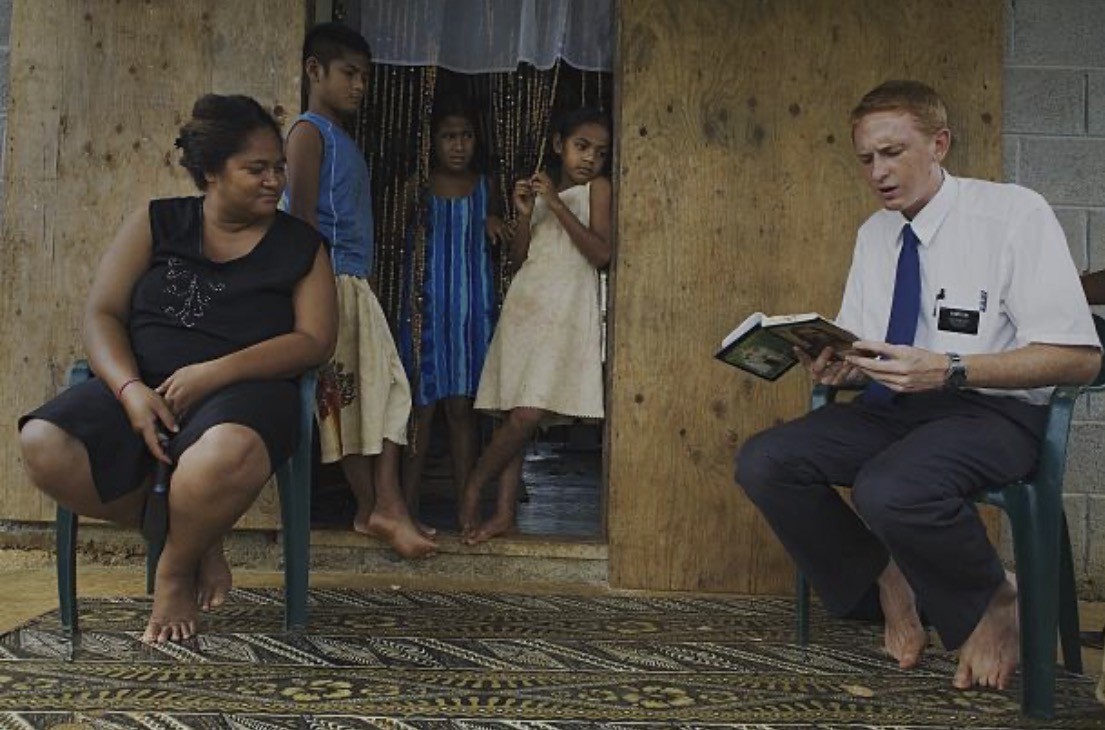
However, among the hustle and bustle of these last few months of childhood, there are students who have made a unique decision to give the next two years to complete dedication to their church and their Savior. These young adults are members of the Church of Jesus Christ of Latter-Day Saints. Why are they giving up these precious years to worldwide service and the building up of their faith?
The decade after college, sometimes referred to as the “decade of decisions”, is completely focused on the individual. Youth are introduced into adulthood, where they must pick what they want to spend the rest of their life doing, who they want to spend the rest of their life with, and where they want to live for the rest of their life. It’s all centered around what is best for each person. A mission does the exact opposite of this. For eighteen months up to two years, young adults take themselves out of the question and focus completely on service and how they can bring other people to Christ. In so doing, missionaries develop life skills and self-respect which lasts throughout their life.
The first blessing of a mission is the strengthened testimony of each missionary. Religious or not, lives are continually blessed in believing in something greater. Here, missionaries develop a deeply rooted testimony of Jesus Christ. With this testimony comes additional understanding of the world, hope and joy through challenges of life, and an appreciation and love for others. Faith in Jesus Christ brings stability and a reliable path for life. Missionaries come to recognize these important benefits through sharing their testimonies with others. A common way to learn and memorize difficult concepts in school is to teach it to others. It seems backwards, but teachers often tell students to teach parents or younger siblings concepts from class because through teaching comes understanding. A mission applies this technique to religion and real-life scenarios. Through teaching others the Gospel of Jesus Christ, missionaries develop a stronger understanding of and lifelong faith in Him.
Another benefit of serving a mission is the preparation for life. Missionaries learn basic life skills which are difficult to master, such as handling a budget and economic difficulties, keeping to a schedule each day in order to maintain the best productivity, taking care of health through diet and sleep, developing and maintaining good relationships, cooking, cleaning, personal hygiene, and so on. Placed in diverse, often foreign environments, one could say missionaries learn modern survival skills!
Missionaries receive a profound gratitude for life, culture and humanity on their mission. Spread across the entire world, they are able to experience the hardships of poverty, see the generational impacts of broken homes, and see the joy which can be found in the little things. Kids who have never left the western side of the states are called to serve in diverse places in Africa, where they see vibrant art, cultural diversity, and learn to place the community before the individual. In Asia, missionaries learn the stories which build their culture, spanning thousands of years, see modern innovation at its finest, and realize the importance of elders in society. Even missionaries in the United States come to understand the diverse “melting pot” which we live in. They will feel the sense of equality among God’s children as they serve, and experience interactions with people from around the world. No matter where each missionary is called, they learn intercultural awareness and receive a beautiful appreciation for others, for life, and for their God. Missionaries learn, through their service, how the deep bond of love truly can connect us all.
Finally, missionaries conclude their service with a newfound resilience and maturity which will carry them through the hard times of life. With every door closed in a missionary’s face, long, dusty mile walked, and every difficult companion and circumstance, what is seemingly tearing their mental state down is actually being treated as a muscle. It gets stronger by breaking apart and then building back together. Missionaries face each day with a prayer of hope in their heart. They look for joy in life as do the people around them. They look out for others before themselves. That is the beauty of a mission. It shapes what the missionary’s outlook on life and projection of life will be forever after. That is why thousands of young high school students across the world today are sacrificing two years of their lives for this work, and why hundreds of primary aged children sing, “I Hope They Call Me on a Mission”.